
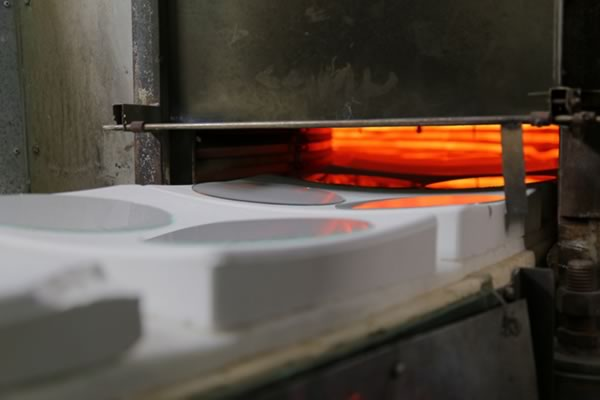
On the line, a hairline crack in a bottle can kill inspection and scrap an entire run. In container annealing, uneven heat locks thermal stress into the ware. That shows up as fractures, distortion, and optical waviness — the kind of issues that QC downstream won’t pass. We built our glass container annealing element to knock out that variability. What matters, technically The element runs short-wave infrared quartz emitters matched to glass emissivity. Energy goes straight into the ware, fast, with minimal convection. Reflector geometry is tuned and the heater layout is dense, so the thermal field stays even across the belt width. Temperature uniformity holds within ±3°C. The payoff is predictable annealing, consistent strain relief, and a stable process window. Specs are straight off the shop floor: 230–460 V, modular lengths for standard lehrs, and terminal options that match what you already have for mounting and wiring. Response is quick — full power in seconds — so setpoint recovery is immediate after door openings and line stops. Why it holds up in a real plant In a high-throughput container plant, you need heat that tracks the setpoint, not drifts. When the heat is uniform, thermal gradients drop, and you cut rejects from thermal stress fractures and shape deviation. Fast recovery lets you shorten the annealing cycle and run higher line speeds without cooking thin sections. Energy use falls because the energy goes into the glass, not into heating air and structure. And the module drops in as a replacement in most standard lehrs, so downtime stays manageable. The details that keep it running Installation is straightforward, but clearance and alignment still matter. Keep the emitter surface clean, and make sure the reflector array isn’t damaged. Dust and misalignment will eat uniformity, plain and simple. Verify your control strategy — PID, properly tuned, prevents overshoot when setpoints change. For very dark or coated ware, confirm emissivity and adjust power density to keep the profile intact. Plan maintenance around lamp life and keep spares on hand. A proactive swap schedule is what keeps the annealing curve stable, day after day.