


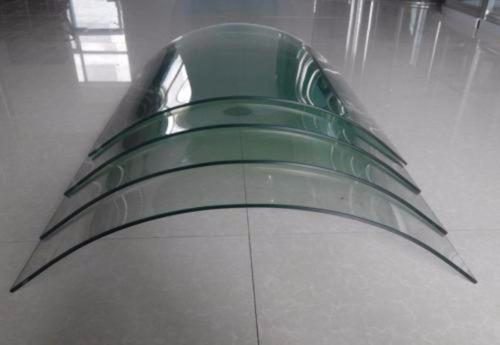
Dealing with Voltage Headaches in Marine Glass Tempering
If you’ve ever tried to ship a tempering line across borders, you know the real nightmare isn’t the freight—it’s the power grid. Imagine getting a machine built for a 110V US plant, only to realize it’s sitting in a 480V or 575V industrial shop. You’re stuck. You either buy a massive, expensive transformer that takes up way too much floor space, or you’re staring at a very expensive paperweight. We figured out a better way. Instead of forcing you to adapt your building to the machine, we adapt the machine to your building. We customize the tungsten filament and the quartz envelope inside the infrared lamps to match whatever voltage you’ve got on the wall. Why this actually matters Voltage isn’t just some number on a spec sheet. It changes how heat actually behaves. Take a 575V lamp. It runs on lower current than a 110V lamp to hit the same wattage. That’s a huge win for your wiring. Your cables don’t get hot, and you don’t have to worry about overheating in those tight, cramped marine enclosures. But you have to get it right. If you accidentally plug a 110V lamp into a 480V circuit?**Pop.**It’s gone in a heartbeat. On the flip side, if you under-volt a lamp, the heat just doesn’t penetrate the glass. You’ll miss that softening point, and your tempering will fail every single time. The hardware side of things We use high-purity quartz because it can handle the brutal thermal expansion without cracking. Depending on what kind of glass you’re working with, we can add coatings to tweak the emission spectrum. It makes the ramp-up time feel almost instant. Just keep in mind: higher voltage means intense, concentrated heat. You’ll want to make sure your cooling fans and heat shields are up to the task so your housing doesn’t bake. Getting it installed The best part? These are just drop-in replacements. Whether you need a weird length or specialized end-caps, we make sure it’s a snug fit. You just wire them into your current controllers and they hit the target temperature. No external converters, no messy workarounds, and way fewer points where things can go wrong. It just works.