Getting the Heat Right for Glass Additives
Most infrared heaters are just… generic. They blast energy across a wide range, but the problem is that most of that energy never actually makes it into the glass. It just bounces off. When you start adding chemical agents to your glass, the material changes. It starts “listening” to different frequencies of heat. If your heater isn’t tuned to those specific frequencies, you’re basically just wasting electricity.
Hitting the Sweet Spot
Think of it like a radio. If you’re tuned to 90.1 but the music is on 105.3, you get nothing but static. It’s the same with glass. If you use a standard short-wave lamp on a specialized compound, the heat just sits on the surface. We fix that by picking specific emitter materials and adding coatings that shift the energy curve. The goal is to hit that exact frequency where your additives are most “hungry” for heat. Suddenly, you aren’t just scorching the surface—the heat actually sinks deep into the material.
The Trade-off
Here’s the catch. When you move away from “off-the-shelf” lamps to get this kind of precision, you lose some raw power. By narrowing the beam to hit a specific peak, you aren’t throwing as much total energy at the glass as a broad-spectrum lamp would. It’s a trade: you get pinpoint accuracy, but you lose some brute force. Because of that, you’ll probably need to tweak your conveyor speed or give the glass a bit more dwell time. It takes a minute to dial in, but the result is worth it.
Putting it to Work
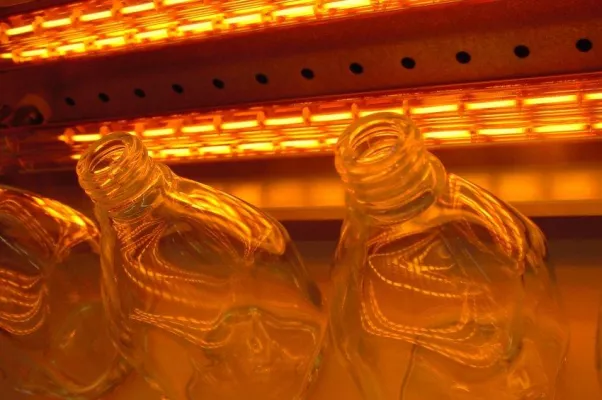
The best part? You don’t have to tear apart your factory to make this work. These lamps are designed to be drop-in replacements. They use the same electrical footprint, so you can just swap them out without rewiring your entire control panel. Once they’re running, you’ll see the difference immediately. The glass feels more consistent. You get a uniform internal temperature and way fewer of those annoying surface stresses that lead to cracks. One quick tip: keep an eye on your cooling fans. Since this energy is so concentrated, the lamp housings can get pretty hot if your airflow is blocked. Keep them breathing, and you’re good to go.